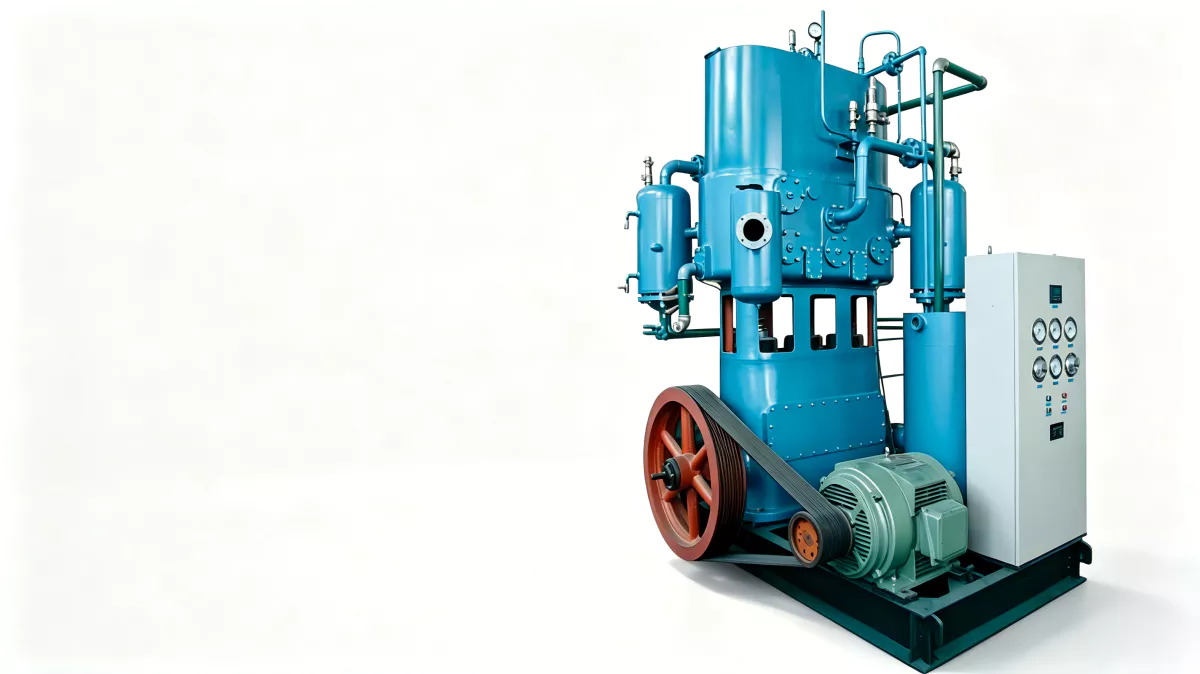
Sauerstoffverstärkerkompressor 0,1 MPa bis 32 MPa · 0,7 bis 150 m³/min
Ölfreie Kolbenkompressoren für PSA-Sauerstoffanlagen, Zylinderfüllstationen, Stahlwerke und Industriegassysteme. Gefertigt nach API 618. Angepasst an Ihre Einlassbedingungen.
Unsere Sauerstoffkompressor-Serie
Kolbenkompressoren für Sauerstoff für jeden Druckbedarf – von der Niederdruck-Luftzerlegung bis zur Hochdruck-Flaschenbefüllung. Alle Baureihen basieren auf einer ölfreien Verdichtungsplattform und sind auf Ihre spezifischen Einlassbedingungen abgestimmt.
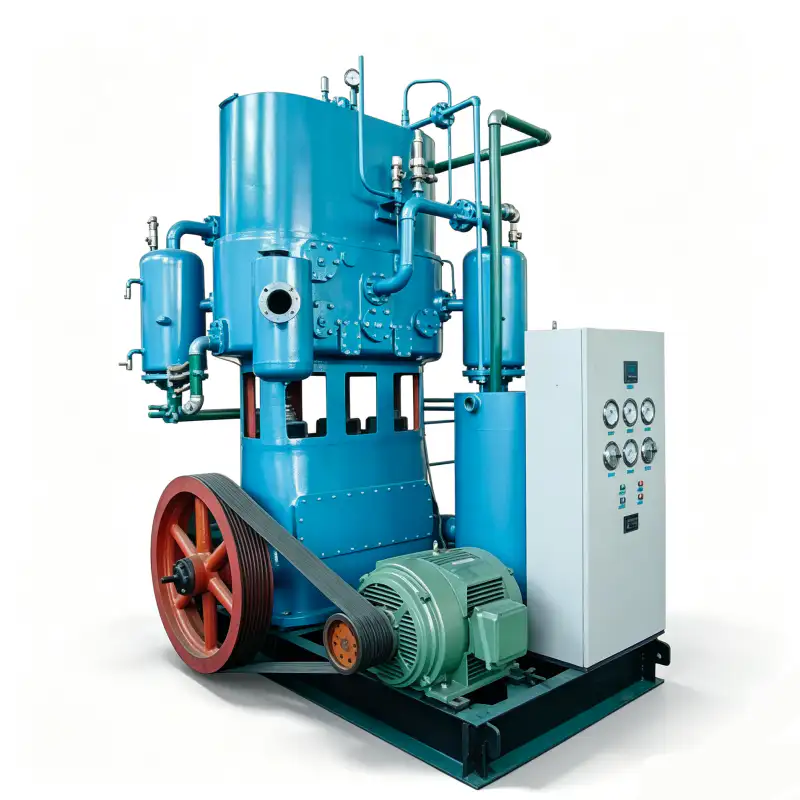
Ölfreie Hubkolbenkompressoren zur Druckerhöhung von PSA (Druckluft- oder verdampftem Flüssigsauerstoff) auf Zylinderfülldruck. Mehrstufige Verdichtung mit Zwischenkühlung für niedrige Austrittstemperatur. Geräuschpegel unter 75 dB. Jährliche Schmierung erforderlich – kein Ölwechsel, keine Ölfilter.
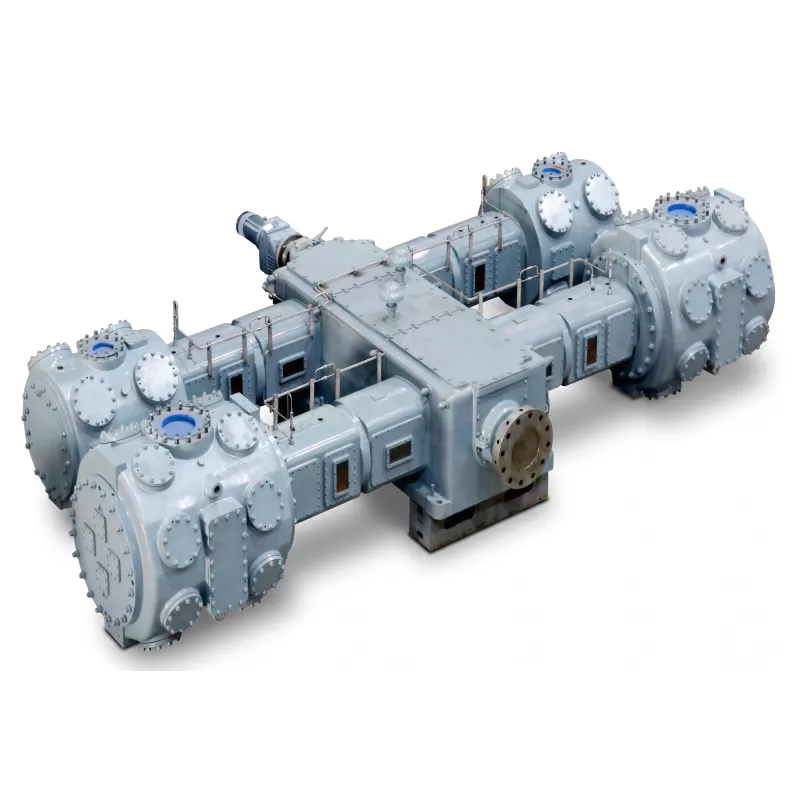
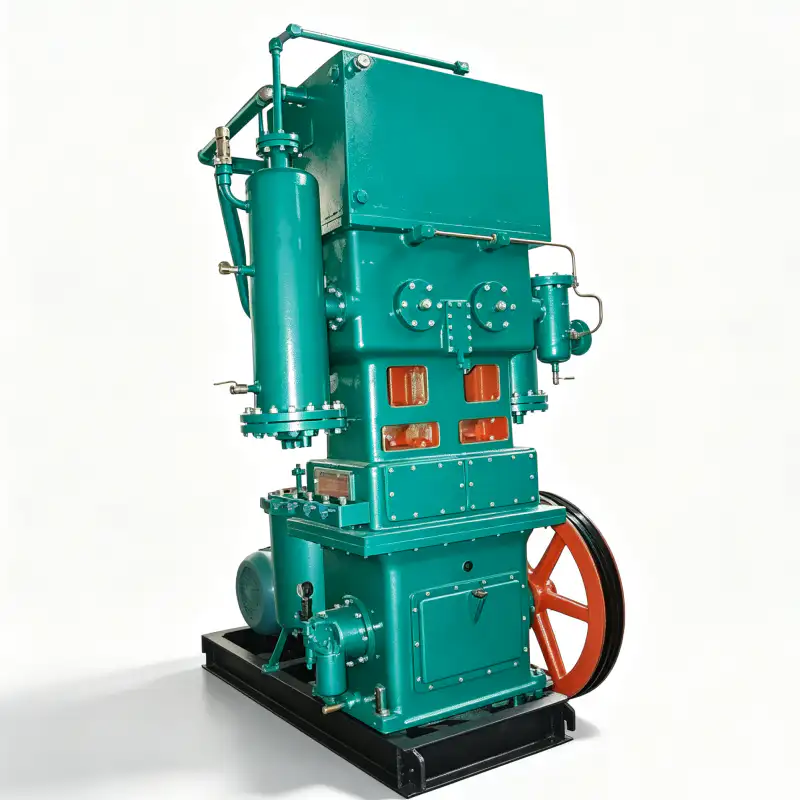
Für Stahlwerke, Glasöfen und großtechnische Sauerstoffanlagen. Drei- und vierstufige Ausführungen im Leistungsbereich von 55 kW bis 1.200 kW. Ausgelegt für den 24-Stunden-Dauerbetrieb mit langsam laufendem Antrieb für verlängerte Wartungsintervalle.
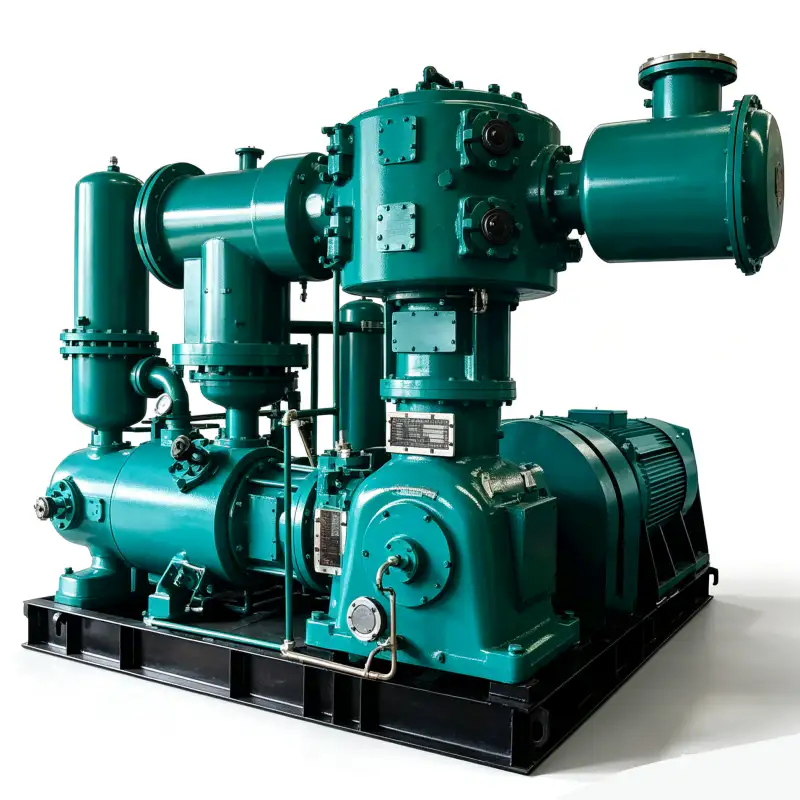
Geeignet für die Sauerstoffversorgung beim Laserschneiden, die Autogenverbrennung von Glas, die Sauerstoffanreicherung von Abwasser und PSA-Verteilungsleitungen mit einem Förderdruck von 10–25 bar. Zweistufige Kompression. Kompakte Bauweise für die Installation in Produktionsanlagen.
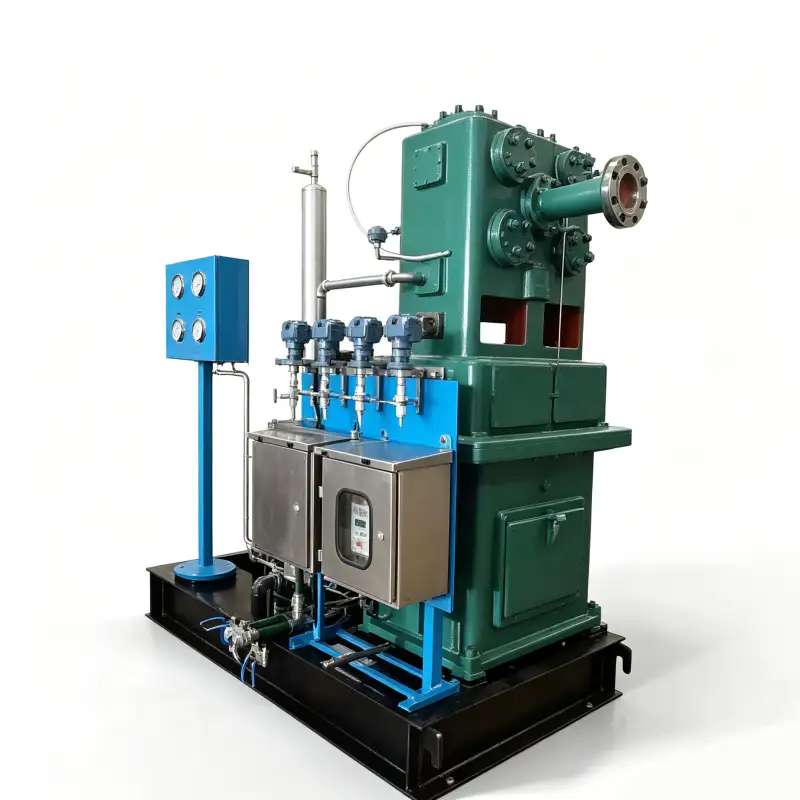
Primärstufenkompressoren für die Sauerstofferzeugung in Luftzerlegungsanlagen und die Sauerstoffverteilung in PSA-Anlagen bei 2–8 bar. Ein- und zweistufige Ausführungen. Leistungsbereich von 11 kW bis 1.200 kW, der den größten Fördermengenbereich unseres Portfolios abdeckt.
Hochleistungs-Druckerhöhungspumpen für große Luftzerlegungsanlagen und EPC-Projekte. Skid-montierte Anlagen verfügbar. Entspricht API 618. Kundenspezifische Eingangsdrücke möglich – auch Druckerhöhung aus einer bereits unter Druck stehenden Sauerstoffleitung mit 0,17 MPa oder höher.
Dieselbe technische Plattform wie unsere Sauerstoffflaschenfüllanlagen. Verfügbar für die Befüllung von Stickstoff- (N₂) und Wasserstoffflaschen (H₂) bis 150 bar bzw. 165 bar. Durchgehend ölfreie Schmierung. Kein Risiko einer Ölkontamination bei Anwendungen, die höchste Gasreinheit erfordern.
Finden Sie Ihren Kompressor
Wählen Sie Ihr Gas, die Anwendung und die benötigte Durchflussrate. Unsere Auswahllogik ermittelt die passende Produktkategorie und Modellreihe für Ihre Anforderungen.
Vertrauenswürdig in sechs Schlüsselbranchen
Die Anforderungen an die Sauerstoffkompression variieren je nach Branche erheblich. Jede Anwendung hat spezifische Einlassbedingungen, erforderliche Auslassdrücke und Betriebszyklusanforderungen. Erfahren Sie mehr. vollständiger Anwendungsleitfaden Um zu sehen, wie unsere Kompressoren für Ihre Branche spezifiziert sind.
PSA-Sauerstoffgeneratoren liefern typischerweise einen Druck von 4–6 bar. Unsere ölfreien Boosterkompressoren erhöhen diesen auf 150–165 bar für die Zylinderbefüllung und gewährleisten so die vorschriftsmäßige Versorgung von Krankenhäusern und Gesundheitseinrichtungen mit medizinischem Gas.
Die Stahlerzeugung im Konverter, die Sauerstoffanreicherung im Hochofen und die Wärmebehandlung von Metallen erfordern zuverlässigen Hochdrucksauerstoff mit 30–35 bar und Durchflussraten bis zu 100 m³/min. Die Baureihen DW und 4MW bewältigen die größten industriellen Lasten.
Die Oxyfuel-Verbrennung in Glasöfen verbessert die Flammentemperatur, senkt den Brennstoffverbrauch um bis zu 301 TP3T und reduziert die NOx-Emissionen. Die Sauerstoffzufuhr erfolgt im Mitteldruckbereich von 10–16 bar im Dauerbetrieb.
Gasverteiler und Tankstellen benötigen einen konstant hohen Druck, um Sauerstoff-, Stickstoff- und Wasserstoffflaschen effizient und sicher rund um die Uhr zu befüllen. Geringe Wartungskosten sind für die Rentabilität entscheidend.
Hochdichte Kreislaufanlagen für Aquakulturen (RAS) benötigen eine kontinuierliche und zuverlässige Sauerstoffversorgung. Die Vor-Ort-PSA-Erzeugung in Kombination mit unseren Niederdruck-Boostern macht die Lieferung von Sauerstoffflaschen überflüssig.
Oxidationsreaktoren, Anlagen zur partiellen Oxidation und Abgasreinigungsverfahren benötigen stabilen Sauerstoff im mittleren bis hohen Druckbereich mit kundenspezifischen Durchflussraten. Ausführungen gemäß API 618 für die Installation in explosionsgefährdeten Bereichen sind verfügbar.
Warum ölfreie Hubkolbentechnologie
Technische Vorteile, die bei Sauerstoffanwendungen entscheidend sind – wo Schmierstoffverunreinigung nicht nur lästig, sondern ein Sicherheitsrisiko darstellt. Erfahren Sie mehr über die technischen Hintergründe auf unserer Website. Unternehmens- und Produktionsseite.
Die Zylinderbohrungen bleiben während des gesamten Kompressionsprozesses ölfrei. An den äußeren Lagerstellen ist lediglich eine Schmierung pro Jahr erforderlich. Der austretende Sauerstoff erfüllt die Reinheitsanforderungen der ISO 8573-1 für medizinische und industrielle Anwendungen – ein nachgeschalteter Ölkoaleszenzfilter ist nicht notwendig.
Die durchschnittliche Betriebsdrehzahl liegt bei 260–350 U/min – deutlich niedriger als bei öleingespritzten Schraubenkompressoren mit über 3.000 U/min. Der reduzierte mechanische Verschleiß verlängert die mittlere Betriebsdauer zwischen den Überholungen auf über 25.000 Betriebsstunden bei den Baureihen ZW, LW und DW. Weniger ungeplante Stillstände und geringere Wartungskosten über die gesamte Lebensdauer.
Zwei- bis fünfstufige Konfigurationen decken Ausgangsdrücke von 0,20 MPa (Niederdruckversorgung) bis 32 MPa (Hochdruck-Zylinderbefüllung) ab – alles innerhalb einer einzigen Produktplattform. Sie benötigen keine Produkte von verschiedenen Lieferanten für die unterschiedlichen Druckanforderungen Ihrer Anlage.
Jede Einheit ist mit einer Niederdruckabschaltung am Einlass, einem Überdruckventil am Auslass, einem Zwischenstufentemperaturalarm und einer automatischen Abschaltfunktion ausgestattet. Sie ist für den 24-Stunden-Dauerbetrieb ausgelegt; SPS-Steuerung und Fernüberwachung sind auf Anfrage erhältlich.
Manufacturing Capability & Certifications
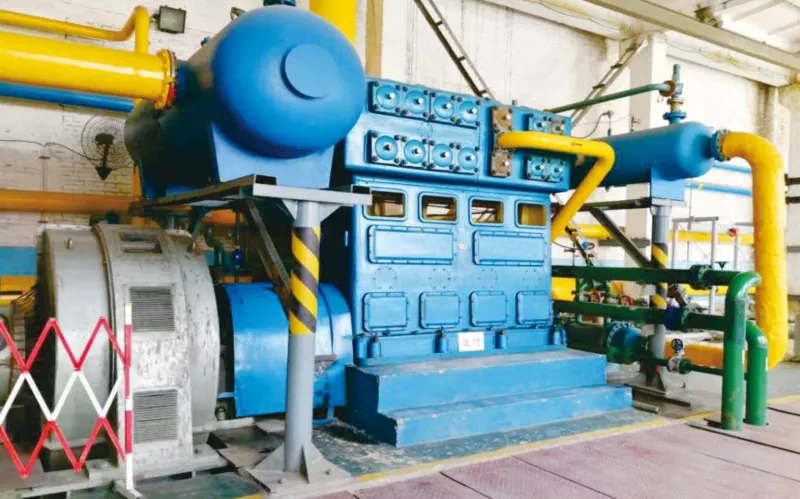
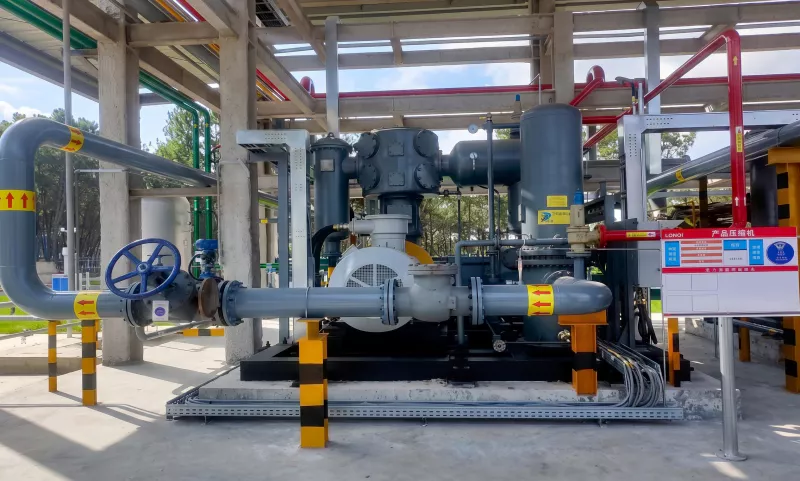
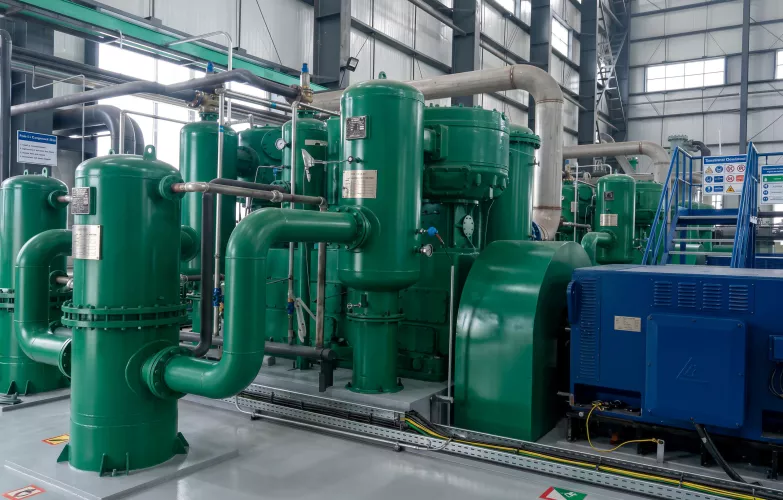
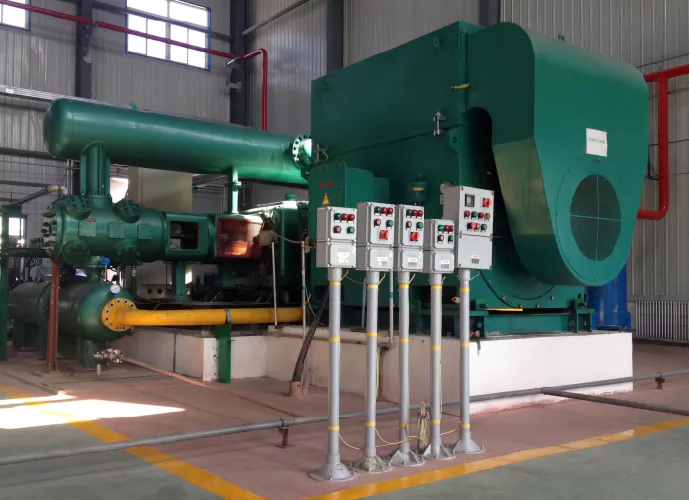
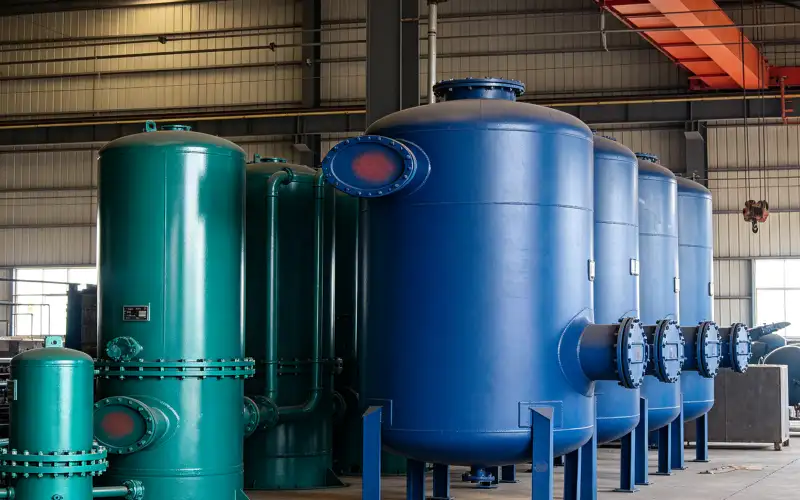
Backed by decades of industrial gas compressor manufacturing, operating a fully equipped production facility with in-house casting, machining and pressure testing. Every unit undergoes hydrostatic pressure test and performance verification before shipment.
System Certification
for Gas Industry Services
for Export Markets
Association Member
Oxygen Booster Compressors: A Specification Guide
What engineers and procurement managers need to know before specifying an oxygen booster compressor — from technology selection to pressure-stage configuration.
What Is an Oxygen Booster Compressor?
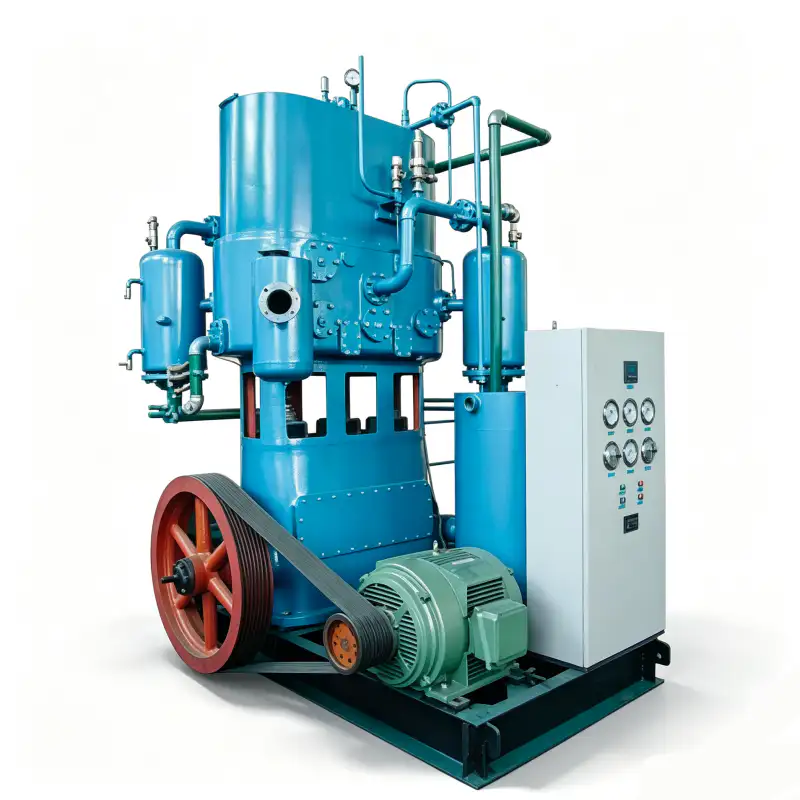
An oxygen booster compressor is a reciprocating machine that raises the pressure of an oxygen stream from a lower inlet pressure to a higher outlet pressure required by the downstream process or storage system. The gas source — typically a PSA oxygen generator, a VPSA unit, or a liquid oxygen vaporiser — has already done the initial pressure work. The booster takes that gas and raises it further.
The most common applications are oxygen cylinder filling stations (0.1–0.5 MPa inlet to 15.0–16.5 MPa cylinder pressure); steelmaking oxygen pipelines (3.0–3.5 MPa); and oxy-fuel combustion systems for glass furnaces (1.0–1.6 MPa).
Why the Compressor Must Be Oil-Free
Compressed oxygen reacts with hydrocarbon lubricants with extreme vigour. At elevated pressures and temperatures inside a compression cylinder, even small amounts of mineral oil can ignite spontaneously. Oil-free reciprocating compressors eliminate lubricant from the compression zone entirely — pistons run on PTFE-compound rider rings; cylinder walls need no lubrication. Output meets ISO 8573-1 Class 0 oil requirements without any downstream filter.
Pressure Stage Configuration
Each compression stage should not exceed a ratio of approximately 3.5–4:1. For oxygen (specific heat ratio gamma ≈ 1.4), this limits per-stage temperature rise to below 160°C in normal industrial service.
| Stages | Outlet Pressure | Typical Application |
|---|---|---|
| 2-stage | 0,20 – 0,80 MPa | PSA distribution, ASU output |
| 3-stage | 3.0 – 3.5 MPa | Steel mill pipeline, BOF converter |
| 4-stage | 10 – 15.0 MPa | Cylinder filling (large capacity) |
| 5-stage | 15,0 – 16,5 MPa | Cylinder filling (ZW compact series) |
Inter-stage water-cooled heat exchangers with moisture separators are fitted between every stage on all models above 18.5 kW. Condensate discharge is automatic.
How to Specify an Oxygen Booster Compressor
When enquiring, providing the following information allows us to return a complete technical recommendation:
- Gas type and purity (medical or industrial; trace contaminants)
- Inlet pressure — minimum and maximum (PSA output varies with regeneration cycle)
- Required outlet pressure — steady-state and peak
- Flow rate in Nm³/h or m³/min at inlet conditions (specify clearly)
- Duty cycle: continuous 24-hour, intermittent or seasonal
- Cooling medium: water temperature/pressure or air-cooled preference
- Power supply: voltage, frequency, available fault current
- Installation: indoor/outdoor, altitude, ambient temperature range
- Applicable standards: API 618, local pressure vessel code, area classification
PSA Integration — Key Consideration
A buffer receiver between PSA and booster is strongly recommended. Size the receiver for at least 10–15 minutes of compressor flow capacity. The booster inlet low-pressure cutoff protects the machine if PSA output falls below the minimum safe inlet pressure.
150 bar vs 165 bar & EPC Procurement
Cylinder Filling Pressure Selection
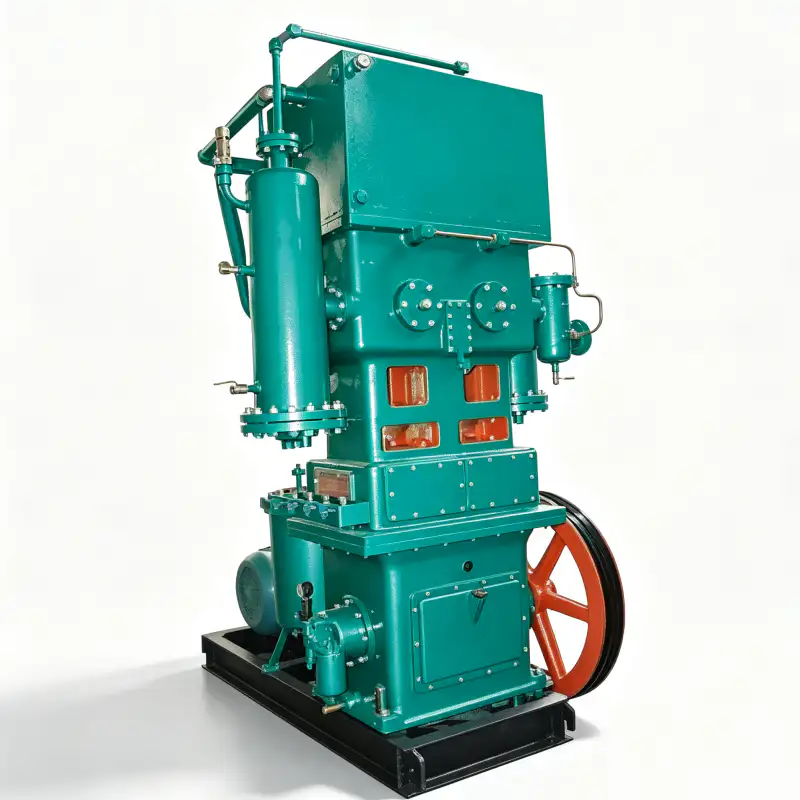
The most common fill pressure for T-type industrial cylinders in Europe and Asia is 150 bar (15.0 MPa) at 15°C. In some markets, 165 bar (16.5 MPa) is preferred to maximise gas content per cylinder. Our ZW series covers both: /150 and /165 suffix variants share the same frame — only stage ratios and final-stage design differ.
Large Industrial Projects and EPC Procurement
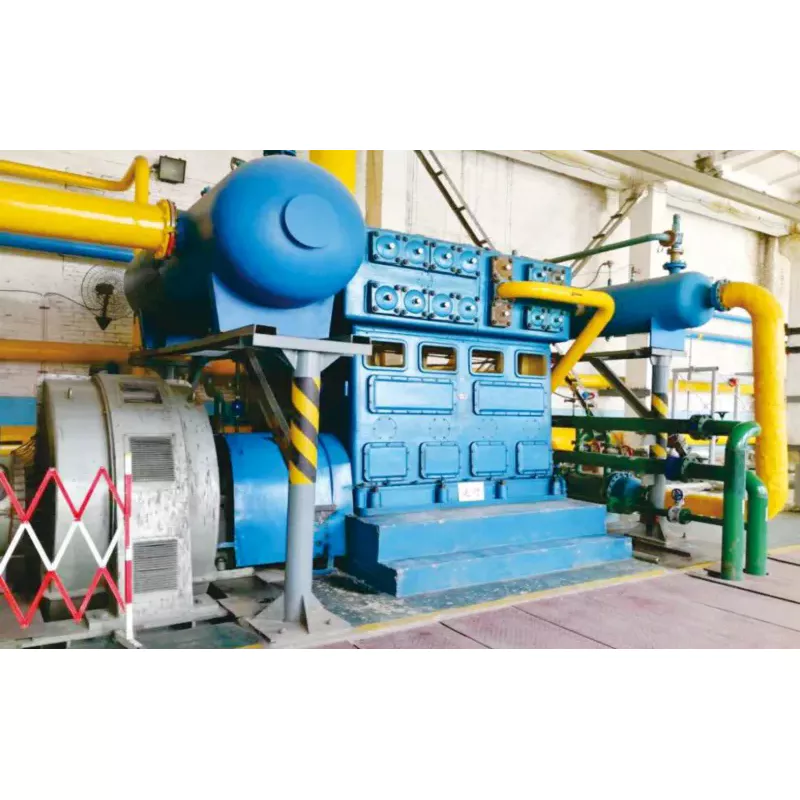
For air separation unit integration and steel mill oxygen supply, the compressor is specified against a process data sheet to API 618 Fifth Edition. We supply fully assembled skid-mounted packages — compressor, motor, inter-stage coolers, separators, instrumentation, control panel and interconnecting piping on a single baseplate — minimising site installation time. ATEX and explosion-proof configurations available.
Maintenance and Total Cost of Ownership
Lifetime cost is dominated by energy (60–80%) and maintenance (15–30%). Oil-free reciprocating designs have no oil changes, no oil filter elements, no separator cartridges. Primary consumables are piston rings (15,000–25,000 hr interval) and valve plates (8,000–12,000 hr). Explore the full product catalogue or contact us for a comparative analysis.
Common Questions
An oxygen booster compressor is specifically designed for pure oxygen service. The critical differences are: (1) oil-free compression throughout — lubricating oil and oxygen are incompatible at pressure due to combustion risk; (2) material selection compatible with oxygen service (avoiding aluminium alloys, certain plastics and copper alloys at high concentrations); (3) internal surface cleanliness standards — all wetted surfaces are degreased and cleaned to oxygen service standards before assembly; and (4) conservative design margins for pressure and temperature. A standard air compressor cannot be safely repurposed for oxygen service.
Yes. Our ZW, LW and DW series accept inlet pressures from atmospheric (approximately 0.1 MPa absolute) upward. PSA oxygen generators typically output at 0.3–0.6 MPa. We recommend installing a buffer receiver between the PSA and the booster to smooth out pressure fluctuations during the PSA regeneration cycle. The booster inlet low-pressure shutdown ensures the machine stops safely if PSA output falls below the minimum acceptable inlet pressure.
Our compressors are designed and manufactured to API 618 (Reciprocating Compressors for Petroleum, Chemical and Gas Industry Services). ISO 9001 quality management certification is held for our manufacturing facility. CE marking is available for European markets. Pressure vessel components are manufactured and tested to relevant national pressure vessel standards. For projects requiring specific regional certifications, please discuss your requirements with our engineering team before order placement.
Routine maintenance on our ZW, LW and DW series is minimal by design. External bearing lubrication requires one grease application per year. Valve plates and piston rings are the primary wearing components; inspection intervals depend on operating hours and gas conditions but typically fall in the range of 8,000–12,000 operating hours for valve inspection and 15,000–25,000 hours for piston ring replacement. There are no oil changes, no oil filter elements, and no oil separator cartridges — eliminating the highest-frequency maintenance items found on oil-injected compressors.
Yes. For large industrial and EPC projects, we supply fully assembled skid-mounted packages including the compressor, drive motor, inter-stage coolers and moisture separators, process and utility piping, instrumentation and safety devices, and a PLC-based control panel with local HMI. The package is factory-assembled, pressure-tested and performance-tested before shipment, minimising site installation time. ATEX and explosion-proof configurations are available for hazardous area classification. Contact us with your project data sheet for a technical and commercial proposal.
Get in Touch
Our engineers are ready to discuss your oxygen compression requirements — inlet conditions, outlet pressure, flow rate, gas purity, standards compliance and any special installation constraints.
For specifications, model selection, inlet/outlet pressure matching and custom engineering requests. Share your process data sheet and we will respond with a technical recommendation.
[email protected]Tell us your required outlet pressure, flow rate, inlet conditions and gas type. We will prepare a detailed technical and commercial proposal tailored to your project. All enquiries are treated as strictly confidential.
Open Enquiry Form →We manufacture to API 618 and related national standards. All compressors are available with custom inlet pressure, outlet pressure and flow rate configurations. Custom skid-mounted packages available for EPC projects.