Why Glass Manufacturers Are Switching to Oxy-Fuel Combustion
The glass manufacturing industry has been transitioning from conventional air-fuel combustion to oxy-fuel combustion for more than three decades. The driving forces behind this transition are well-documented: higher flame temperatures, significant reductions in fuel consumption, lower NOx emissions, and — in many cases — improved glass quality through reduced nitrogen infiltration into the melt.
What is less well understood is the engineering infrastructure required to deliver the oxygen reliably and at the right pressure. A glass tank furnace runs continuously for 10 to 15 years between rebuilds. The oxygen supply system must run for the same duration without disruption. Choosing between cylinder delivery, liquid oxygen (LOX), and on-site oxygen generation with compression is not simply a cost calculation — it is a decision about operational resilience over a very long production horizon.
We have supplied medium-pressure oxygen booster compressors to glass manufacturers across multiple countries. This article draws on that experience to explain what the oxygen supply system for a glass furnace actually requires.
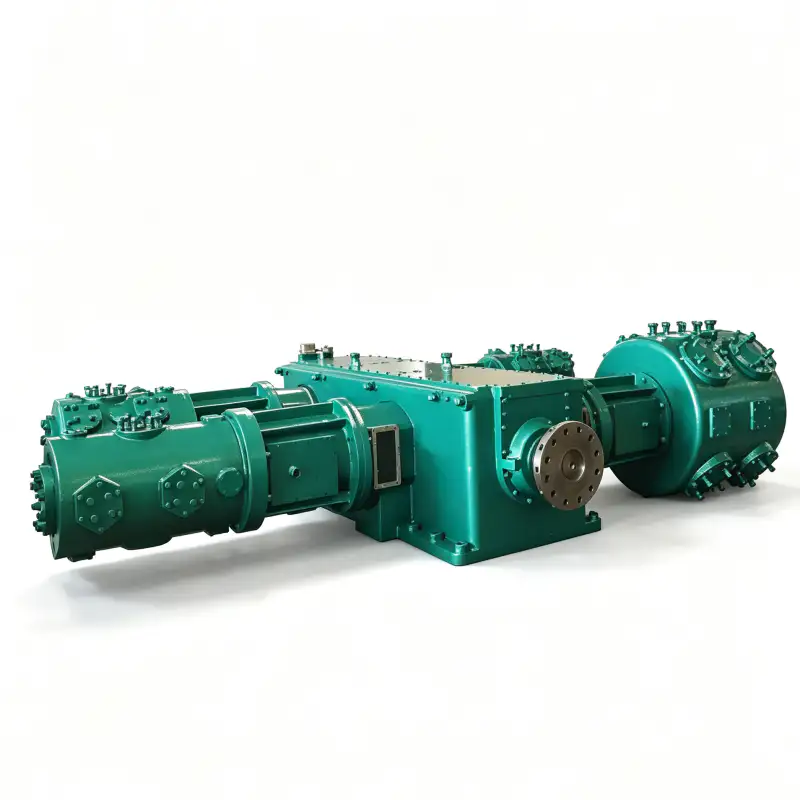
Oxygen Pressure Requirements in Glass Furnace Applications
The oxygen delivery pressure at the burner manifold for a glass tank furnace is typically in the range of 0.5 to 1.5 MPa (5 to 15 bar), depending on the furnace design and the burner supplier’s specification. The distribution header pressure — the pressure at which oxygen is delivered from the supply system to the furnace building — is usually 1.0 to 1.6 MPa (10 to 16 bar) to allow for pressure drop in the building pipework and to provide regulator headroom at each burner station.
This pressure range places glass furnace oxygen supply firmly in the medium-pressure product class — our ZW and LW series two-stage compressors cover this range at outlet pressures from 1.0 MPa (10 bar) to 1.6 MPa (16 bar). All models in this class run on standard 380V power supply without requiring a high-voltage transformer.
| Furnace Type | Oxygen Demand | Header Pressure | Compressor Range |
|---|---|---|---|
| Container glass (small) | 3 – 8 m³/min | 1.0 – 1.2 MPa | ZW-3/15 to LW-6/15 |
| Container glass (large) | 8 – 20 m³/min | 1.0 – 1.5 MPa | LW-10/15 to ZW-20/15 |
| Float glass (single furnace) | 15 – 35 m³/min | 1.2 – 1.6 MPa | LW-24/16 or multiple units |
| Specialty glass / fibre glass | 5 – 15 m³/min | 1.0 – 1.5 MPa | LW-6/15 to LW-10/15 |
The Combustion Chemistry: Why Oxygen Concentration Matters
In air-fuel combustion, the 79% nitrogen in air is an inert diluent that absorbs heat without contributing to combustion. This has two consequences: the flame temperature is lower than it would be in pure oxygen, and a significant fraction of the fuel’s chemical energy goes into heating nitrogen rather than the glass melt.
Oxy-fuel combustion replaces all or most of this nitrogen with oxygen. The thermochemical benefits are significant:
- Flame temperature increases from approximately 1,500°C (air-fuel) to 2,000 – 2,800°C (oxy-fuel), depending on fuel type and stoichiometry
- ⚡ Fuel consumption decreases by 25 – 40% for the same glass throughput, because less energy is wasted heating nitrogen
- NOx emissions decrease by 80 – 90%, because the thermal NOx formation mechanism that produces most glass furnace NOx requires nitrogen from combustion air
- Glass quality can improve, particularly for specialty glass types where dissolved nitrogen from air infiltration causes defects
- Water vapour in the combustion atmosphere increases, which affects glass surface quality in some applications and must be managed through burner placement and furnace atmosphere control
Oxygen Purity Requirements for Glass Furnace Oxy-Fuel
Unlike medical oxygen or laser cutting gas, glass furnace oxy-fuel combustion does not require extremely high oxygen purity. In practice:
- Standard oxy-fuel burners operate effectively with oxygen purity of 90% or higher
- PSA oxygen at 93 ± 3% is fully suitable for most glass furnace combustion applications
- VPSA (vacuum pressure swing adsorption) can produce 90 – 93% oxygen at lower capital cost than PSA for large furnace applications
- LOX at 99.5% is the highest purity option but is typically the most expensive for large volumes
This means that glass manufacturers have more flexibility in their oxygen source than laser cutting or medical filling operators. The choice between PSA, VPSA and LOX for a glass furnace is primarily economic — the purity range of all three is acceptable for combustion.
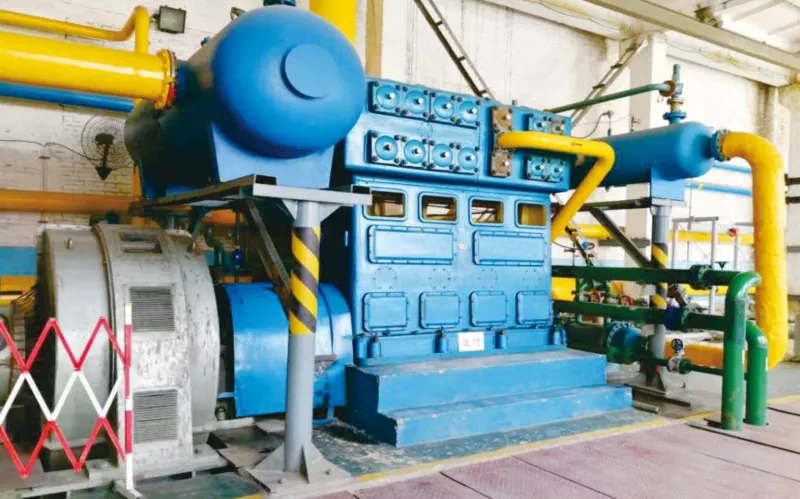
Why On-Site Oxygen Generation with a Booster Compressor Is the Standard Solution for Large Furnaces
For a glass tank furnace operating at 20 m³/min oxygen consumption, the cylinder delivery alternative is economically and logistically unrealistic. At 6 Nm³ per cylinder, 20 m³/min continuous consumption requires the delivery and connection of approximately 200 cylinders per hour. No gas distributor can provide this service, and no filling station can sustain this throughput.
Liquid oxygen by tanker is viable for medium and large furnaces but introduces a dependency on tanker delivery schedules. A furnace that runs for 10 to 15 years requires hundreds of tanker deliveries — and any disruption to the supply chain (weather, vehicle availability, price changes) directly affects furnace operation.
On-site PSA or VPSA generation with a booster compressor eliminates this dependency. Once the capital investment is made, the variable cost is electrical energy to drive the air compressor for the PSA and the booster compressor itself. The oxygen is produced continuously from ambient air.
For a glass manufacturer evaluating this transition, the key capital cost components are: the PSA or VPSA unit, the air compressor that feeds it, the buffer receiver, the oxygen booster compressor, and the distribution pipework inside the furnace building. We supply and specify the booster compressor portion of this system.
Continuous Duty: What It Means for Compressor Selection
A glass tank furnace runs 24 hours a day, 7 days a week, for its entire campaign — typically 10 to 15 years. The oxygen supply system must match this availability requirement. This has specific implications for the booster compressor specification:
- Continuous duty rating: The compressor must be rated for 24-hour continuous operation, not intermittent or cyclic duty. All ZW and LW series compressors are rated for continuous duty.
- Redundancy: For furnaces where any interruption to oxygen supply would cause significant damage or require a controlled furnace cool-down, a standby compressor is essential. We typically recommend N+1 configuration — two compressors, each capable of supplying 100% of demand, with automatic changeover.
- Maintenance access: Plan for annual compressor maintenance (piston ring and valve inspection) during scheduled furnace maintenance windows. The compressor maintenance interval aligns well with annual furnace inspection requirements.
- Spare parts holding: For a 10 to 15 year furnace campaign, we recommend holding one set of piston rings, one set of valve plates, and one set of inter-stage cooler gaskets on site.
Installation Considerations
Medium-pressure oxygen compressors for glass furnace applications have relatively modest installation requirements compared to their industrial gas pipeline counterparts:
- All 380V models (up to LW-24/16 at 250 kW) connect to standard industrial three-phase supply
- Machines can typically be installed with a standard industrial forklift — the LW-6/15 weighs approximately 1.8 tonnes; the LW-24/16 approximately 8 tonnes
- A flat concrete floor with expansion anchor bolts is sufficient — no specialist reinforced foundation block required for models up to approximately 150 kW
- Water cooling connection: typically 0.2 – 0.4 m³/h per 100 kW of motor power at 32°C maximum inlet temperature
- Discharge pipework: schedule 40 or schedule 80 carbon steel rated for 1.6 MPa working pressure; pipe size to limit velocity to below 10 m/s in distribution lines
Our Recommendation for New Glass Furnace Oxygen Systems
For a new glass furnace installation or a conversion from air-fuel to oxy-fuel, we recommend the following approach to oxygen system design: first establish the furnace oxygen demand from the burner supplier’s process data; add 20% for contingency and future capacity; specify a PSA or VPSA at that capacity; then size the booster compressor at the PSA outlet flow at the minimum PSA outlet pressure.
We can work with the PSA or VPSA supplier on the interface specification, and we provide a booster compressor that is pre-configured for the specific inlet and outlet conditions of your system. Contact our engineering team with your furnace oxygen demand and we will specify the appropriate compressor configuration. For full technical specifications of our medium-pressure range, visit the medium-pressure oxygen booster compressor page.